More Than Eight Years After My Son Was Stillborn, Expectant Parents Still Aren’t Warned

“I wish someone had taken us through the most common things that could go wrong,” Kathryn told me. “Stillbirth would have actually been on that list.” She and her husband, Jann, who teaches at Stanford, lost their first child last year. Their son, Ziggy, was stillborn in 2025, at 39 weeks. The pregnancy seemed healthy. They live in Silicon Valley, close to one of the best medical care systems in the country. Still, no one told them that stillbirth (the death of a fetus at or after 20 weeks gestation) is a risk.
I know what Kathryn is going through because I went through something similar eight years ago. Our first child, Lucas, was stillborn when I was 39 weeks pregnant. My pregnancy was healthy too. No doctor or nurse ever mentioned stillbirth during any of my prenatal visits.
I learned later just how common this is. The CDC says about 21,000 babies are stillborn in the United States each year, which is around 65 every day—enough to fill a school bus daily. That is about the same number of babies who die in their first year. These numbers show how serious the problem is.
Still, clinicians rarely mention the risk. Kathryn and I are not alone. Jenny, whose daughter Isabella was stillborn at 37 weeks, said, “No doctor or nurse ever mentioned stillbirth as a possibility. It wasn’t even in our vocabulary.” Emily, whose son Tadhg was stillborn at 39 weeks, told me, “I can’t tell you how many videos and discussions I had about SIDS (Sudden Infant Death Syndrome). SIDS is less common than stillbirth. And yet I heard nothing about stillbirth.”
Why is there so much silence? The book Stillbirth and the Law by Professor Jill Lenz, whose son Caleb was stillborn in 2017 at 37 weeks, gives three common reasons. But none of them hold up.
One reason is that many healthcare providers do not mention stillbirth because they think it is too rare, since it happens in one out of every 175 births. But Professor Lenz points out that many of these providers do warn about SIDS, even though SIDS is much less common than stillbirth.
The second belief is that talking about stillbirth will make patients panic. Lenz calls this medical paternalism, the idea that pregnant women are too emotional or fragile to hear hard facts. But a 2020 Australian study found that most women said they would not become overly anxious if they were told about the risk.
The third idea is that stillbirth is unavoidable, especially in marginalized communities. Rates among non-Hispanic Black women are about twice as high as those among non-Hispanic White and Asian or Pacific Islander women. Lenz says this kind of fatalism is dangerous and runs counter to the evidence. Research suggests about 25 percent of stillbirths, and up to 47 percent of those at term, could be prevented with evidence-based care. Australia and the United Kingdom have lowered stillbirth rates through awareness campaigns and better clinical protocols.
For many loss moms, the silence on stillbirth made our loss even more shocking and harder to bear. Many of us have struggled with guilt and self-blame because of it.
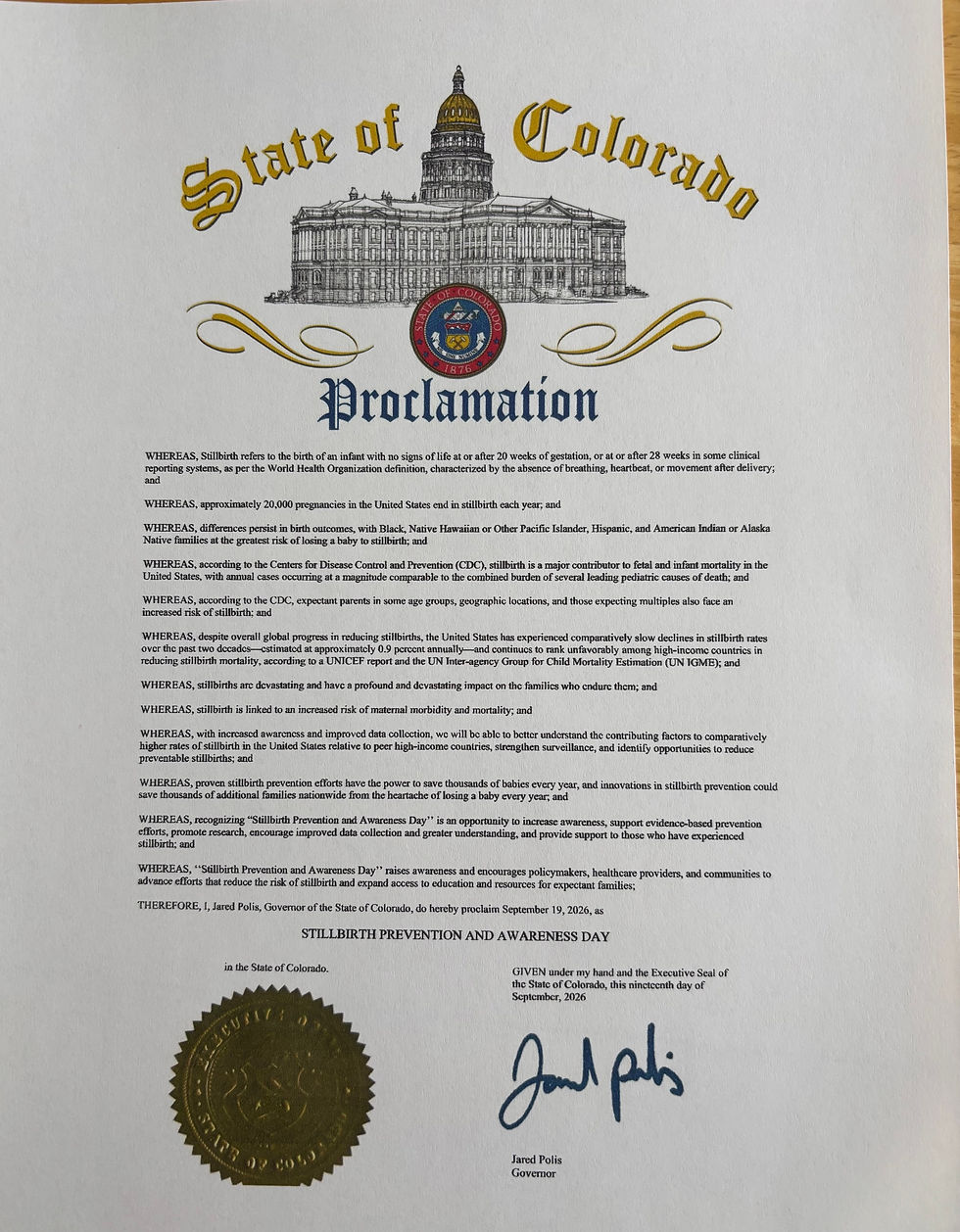
Change in the medical field is slow. That is why I am making the documentary The Due Time to raise awareness about stillbirth and the steps that can help reduce it. We started our work on September 19, 2025, which is National Stillbirth Awareness and Prevention Day, first recognized by Congress in 2022. One year later, we have interviewed about 20 parents in California, Colorado, Iowa, and Minnesota.
The film is still a year away from being finished. Meanwhile, every day, a school bus full of babies is stillborn. On this National Stillbirth Awareness and Prevention Day, I am asking clinicians for something simple: say the word. Recognizing the risk is the first step to preventing it. Tell patients what stillbirth is, how common it is, which signs matter, and what can lower the risk. Knowledge is power. Silence does not protect families. It only leaves them unprepared.


Comments